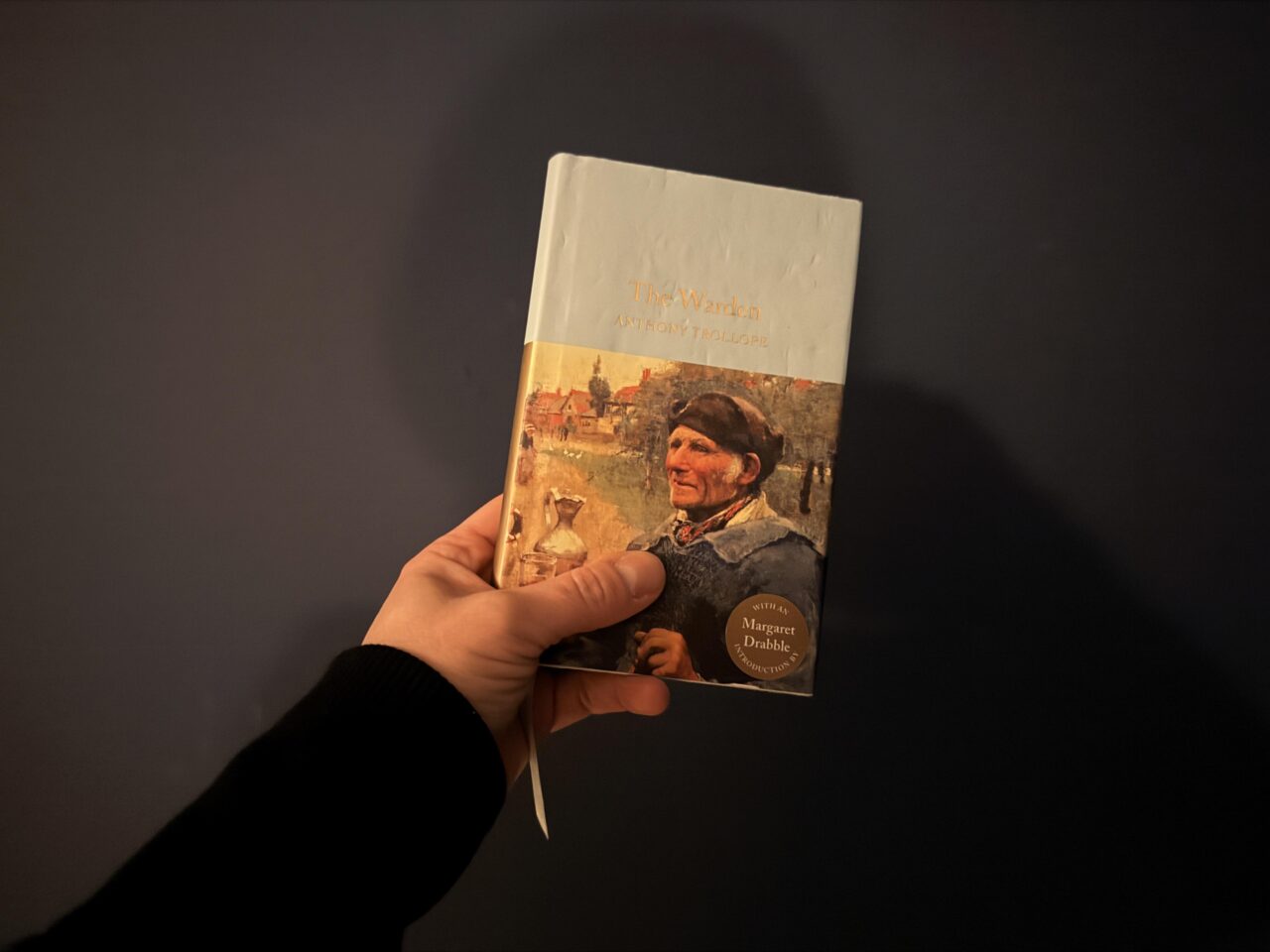
The Warden by Anthony Trollope *****
Reading dates: 31 July 2025 – 8 January 2026
What a delightful novel The Warden is! The theme of reform, covetousness, and conscience made for both light and deep reading. Sentences and characters are beautifully constructed and England (in the form of the fictional town of Barchester) is wonderfully and accurately portrayed. To me this is a perfect novel: short, light, fully and with a happy (ish) ending. I enjoyed it more that The Way We Live Now (although I liked that too) because of how focused it is. One plot, and a good one.
Who has not heard of Mount Olympus, – that high abode of all the powers of type, that favoured seat of the great goddess Pica, that wondrous habitation of gods and devils, from whence, with ceaseless hum of steam and never-ending flow of Castalian ink, issue forth fifty thousand nightly edicts for the governance of a subject nation?
Velvet and gilding do not make a throne, nor gold and jewels a sceptre. It is a throne because the most exalted one sits there; – and a sceptre because the most mighty one wields it. So it is with Mount Olympus. Should a stranger make his way thither at dull noonday, or during the sleepy hours of the silent afternoon, he would find no acknowledged temple of power and beauty, no fitting fane for the great Thunderer, no proud façades and pillared roofs to support the dignity of this greatest of earthly potentates. To the outward and uninitiated eye, Mount Olympus is a somewhat humble spot, undistinguished, unadorned – nay, almost mean.
As a rule, no figure should be drawn in a position which it is impossible to suppose any figure should maintain. The patient endurance of St Sebastian, the wild ecstasy of St John in the Wilder-ness, the maternal love of the Virgin, are feelings naturally portrayed by a fixed posture; but the lady with the stiff back and bent neck, who looks at her flower, and is still looking from hour to hour, gives us an idea of pain without grace, and abstraction without a cause.
In former times great objects were attained by great work. When evils were to be reformed, reformers set about their heavy task with grave decorum and laborious argument. An age was occupied in proving a grievance, and philosophical researches were printed in folio pages, which it took a life to write, and an eternity to read.